




Search

Swing into the 2026 golf season at the Garden City Golf Course
Posted on Thursday, May 07, 2026 10:08 AM
Fore! The Garden City Golf Course has officially opened for the season.
The course opened on Thursday, April 30, with walking only until the conditions dry out. To open the season golfers can enjoy nine holes for $15.45 and rounds of 18 for $26.80 all days of the week (power carts, once conditions permit, are extra). Activity packs are also available.
Spring green fees are in effect until the prime season begins on May 16.
The golf course is open seven days a week from 7:30 a.m. to dusk. Tee times...
Happy St. Catharines Day
Posted on Thursday, April 30, 2026 05:06 PM
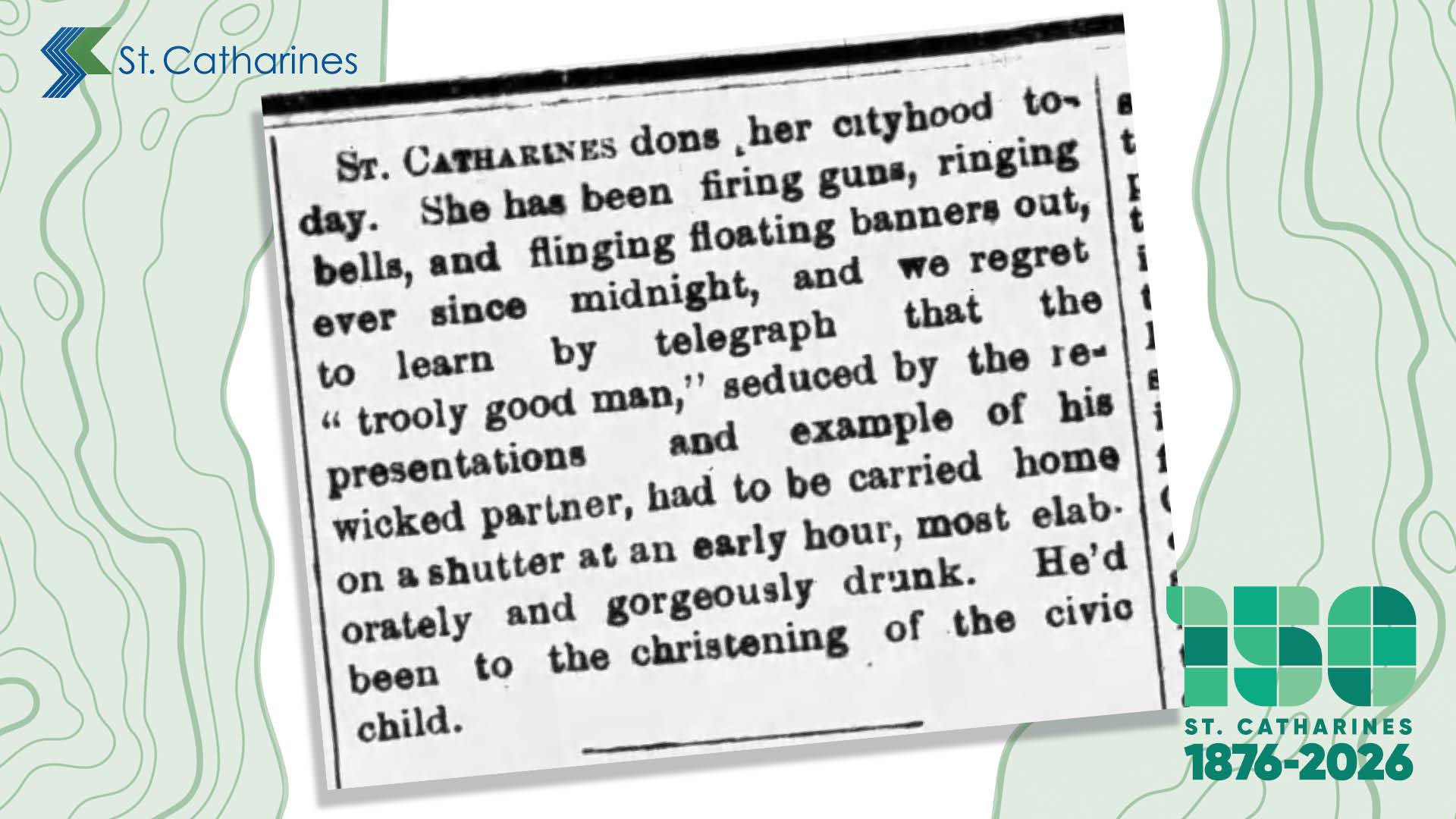
The Act to Incorporate the City of St. Catharines came into effect on May 1st, 1876. This news item appeared in the Hamilton Spectator on that same day.
According to this article, citizens were celebrating beginning at midnight with a torchlight procession and bonfire and continuing on into the morning.
A holiday was declared for May 1st and local businesses were closed so celebrations to mark this momentous occasion could continue unabated. If The Hamilton Spectator is to be believed, some chose...

Community invited to free 150th anniversary celebration on May 2 at Montebello Park
Posted on Wednesday, April 29, 2026 04:57 PM
The City of St. Catharines is set to mark a milestone, and the community is invited to celebrate in a big way with a free, family-friendly event.
Join us on Saturday, May 2, at Montebello Park and help celebrate the 150th anniversary of St. Catharines being incorporated as a City. It was May 1, 1876 when the growth of the community – much of which was a catalyst of the work on the third Welland Canal just five years earlier – saw it attain City status after more than 30 years of being...

Join us at the Spring Clean Up Meet Up
Posted on Friday, April 24, 2026 12:26 PM
Update: Please note, the date of the cleanup has been changed to Sunday, April 26, due to the forecasted inclement weather. The location and time remain the same.
Roll up your sleeves and do a little spring cleaning with the City of St. Catharines this month at Fairview Park.
The City and the Clean City Task Force invites residents to pitch-in at the annual Spring Clean Up Meet Up Sunday, April 26 from 10 a.m. to noon. This year’s spring cleanup tackles litter and other garbage at Fairview Park at...
STC150: The Act to Incorporate the City of St. Catharines
Posted on Thursday, April 23, 2026 04:38 PM
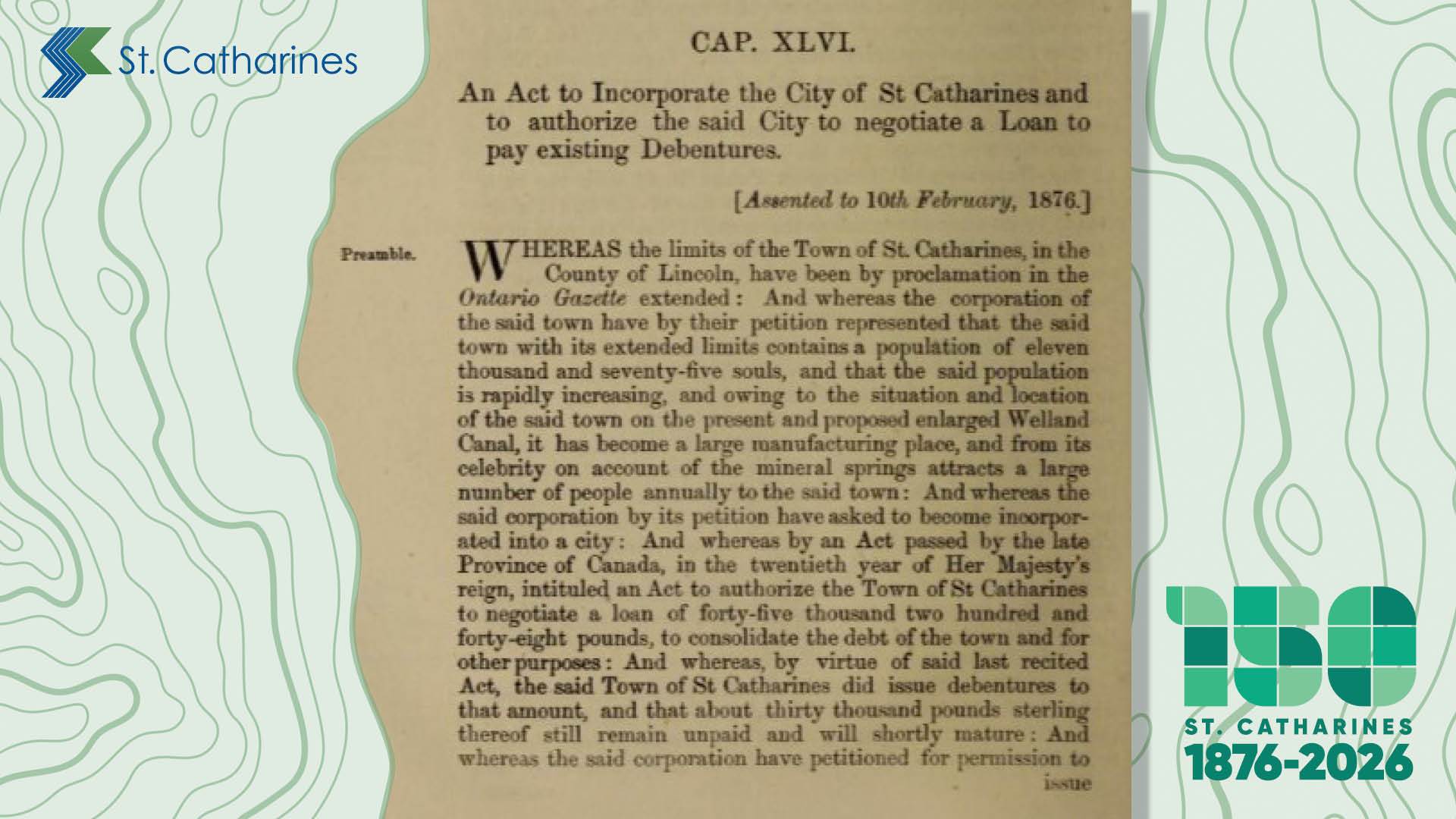
In February 1876, the Ontario Provincial Legislature passed the following statute:
WHEREAS the limits of the Town of St. Catharines, in the County of Lincoln, have been by proclamation in the Ontario Gazette extended:
The St. Catharines Museum and Welland Canals Centre is helping us celebrate our 150th anniversary of being officially incorporated as a City with a weekly look back into our rich history from a diverse range of perspectives.
And whereas the corporation of the said town have by their...
 Subscribe
Contact Us