




 Back to Search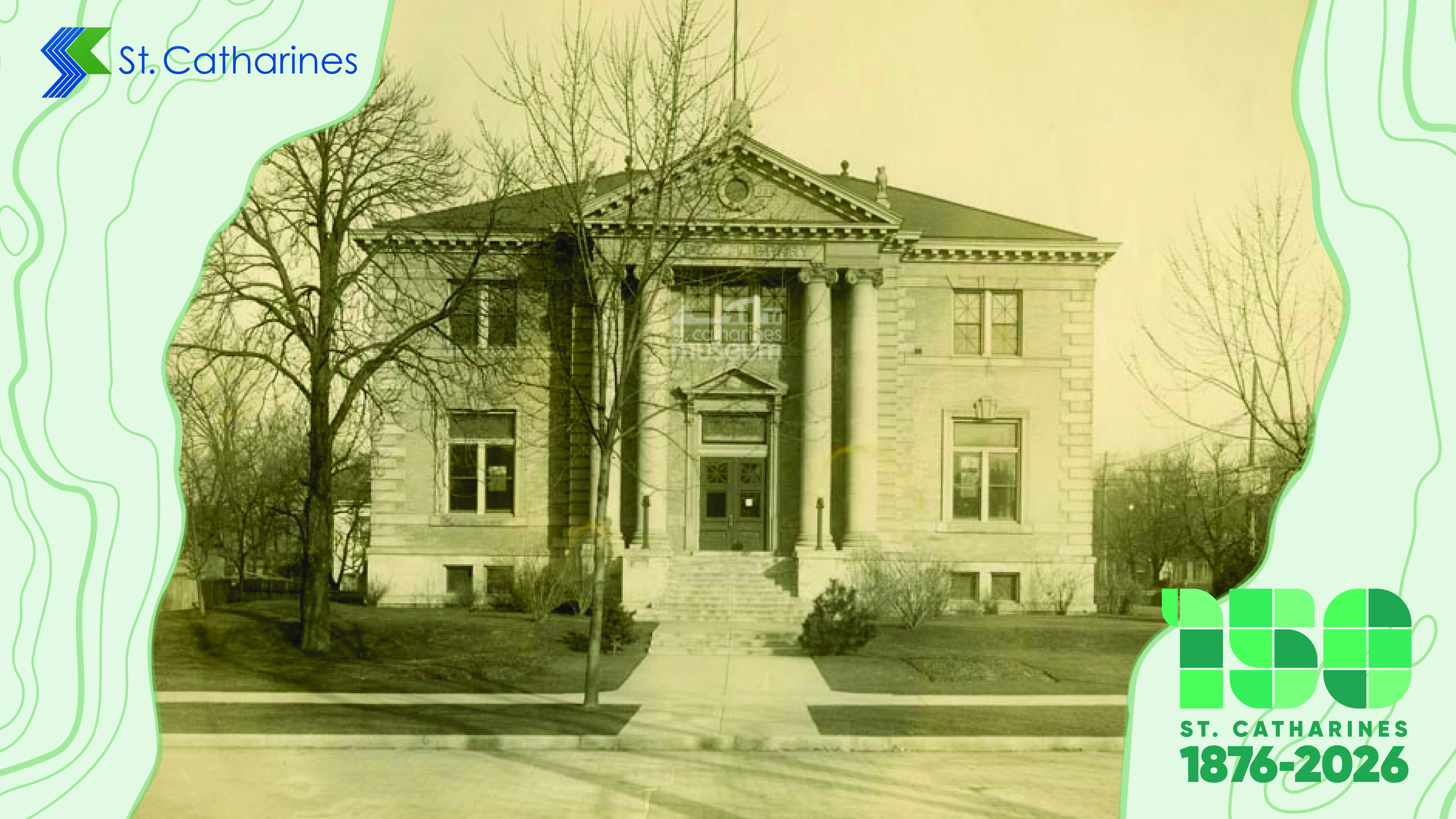
Throughout the early history of St. Catharines, there was an interest in establishing a free, publicly-accessible library for borrowing books and reading newspapers and other periodicals.
In Ontario, the Free Libraries Act was passed in 1882 and allowed cities, towns and villages to establish free public libraries which were available to the local public without direct charge at entry. These libraries were funded by local tax revenue.
At the same time, all across Canada, including St. Catharines, Mechanics Institutes were being established as voluntary associations of working men looking to improve themselves through education, including lectures, reading rooms and lending libraries.
The St. Catharines Museum and Welland Canals Centre is helping us celebrate our 150th anniversary of being officially incorporated as a City with a weekly look back into our rich history from a diverse range of perspectives.
In 1888, the City of St. Catharines passed a by-law and granted an annual sum from tax funds for a free public library in the city. Prior to 1888, the library was located in the Haynes Block on Ontario Street but around that time moved into the Masonic Temple building, also on Ontario street. Unfortunately, the building and the library’s collection was destroyed by fire in 1895.
The library then moved to Queen Street and was located in the second floor of the Victoria Chambers building. In 1905 the library moved to its own purpose-built building on Church Street. The original library building was funded in part by the generosity of the McSloy family and Andrew Carnegie, an American industrialist who funded libraries all across North America.
The current Centennial Library was opened in 1977 to celebrate 100 years of the city. It replaced the aging Carnegie library building and continues to serve local patrons by providing free access to books, information and services.
The above photo shows the old Carnegie library building in 1977 just before the building was demolished. (2897-R)
 Subscribe