




 Back to Search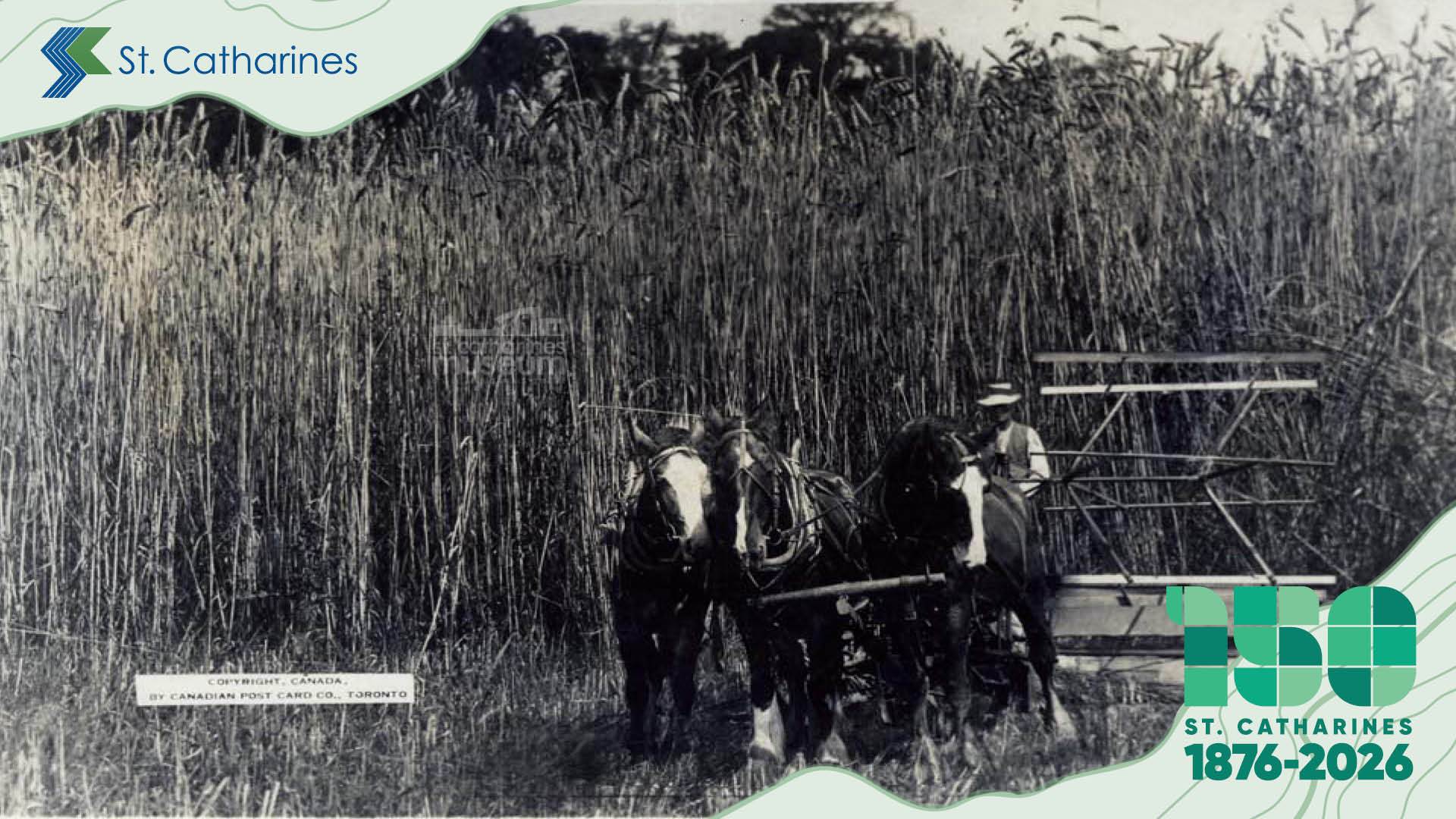
Many early settlers to St. Catharines engaged in farming as their primary business. In 1869, the town of St. Catharines was described as being “beautifully situated … in the midst of a district which for its fertility and cultivation has been called the Garden of Canada.”
The St. Catharines Museum and Welland Canals Centre is helping us celebrate our 150th anniversary of being officially incorporated as a City with a weekly look back into our rich history from a diverse range of perspectives.
The primary crops grown in the early decades of settlement were wheat and corn. Local supporting industries such as mills grew up to support this important part of the local economy. Added to these cash crops were logging and potash making as farmers cleared their lands of trees. By the 1870’s, oats, barley, peas, potatoes, flax, beans, and mixed grains were added as important local crops. Most farmers kept only livestock such as cattle, horses, sheep, hogs, and poultry in order to feed their families and in support of the work on the farm rather than as cash crops.
By 1900, wheat had been surpassed by oats and barley as the largest field crops grown in the region. Oats and barley were important crops to help feed the horses and cattle who provided a significant amount of the farm and transportation work-power in the decades before being replaced with motorized equipment and vehicles.
By the middle of the 20th century, tender fruits would replace grain crops as the most common crops grown in St. Catharines.
This humourous postcard, printed around 1900 reminds the recipient that St. Catharines was an excellent wheat growing community. The wheat in this image has been enlarged to appear supersized. (2006.77.804)
 Subscribe