




 Back to Search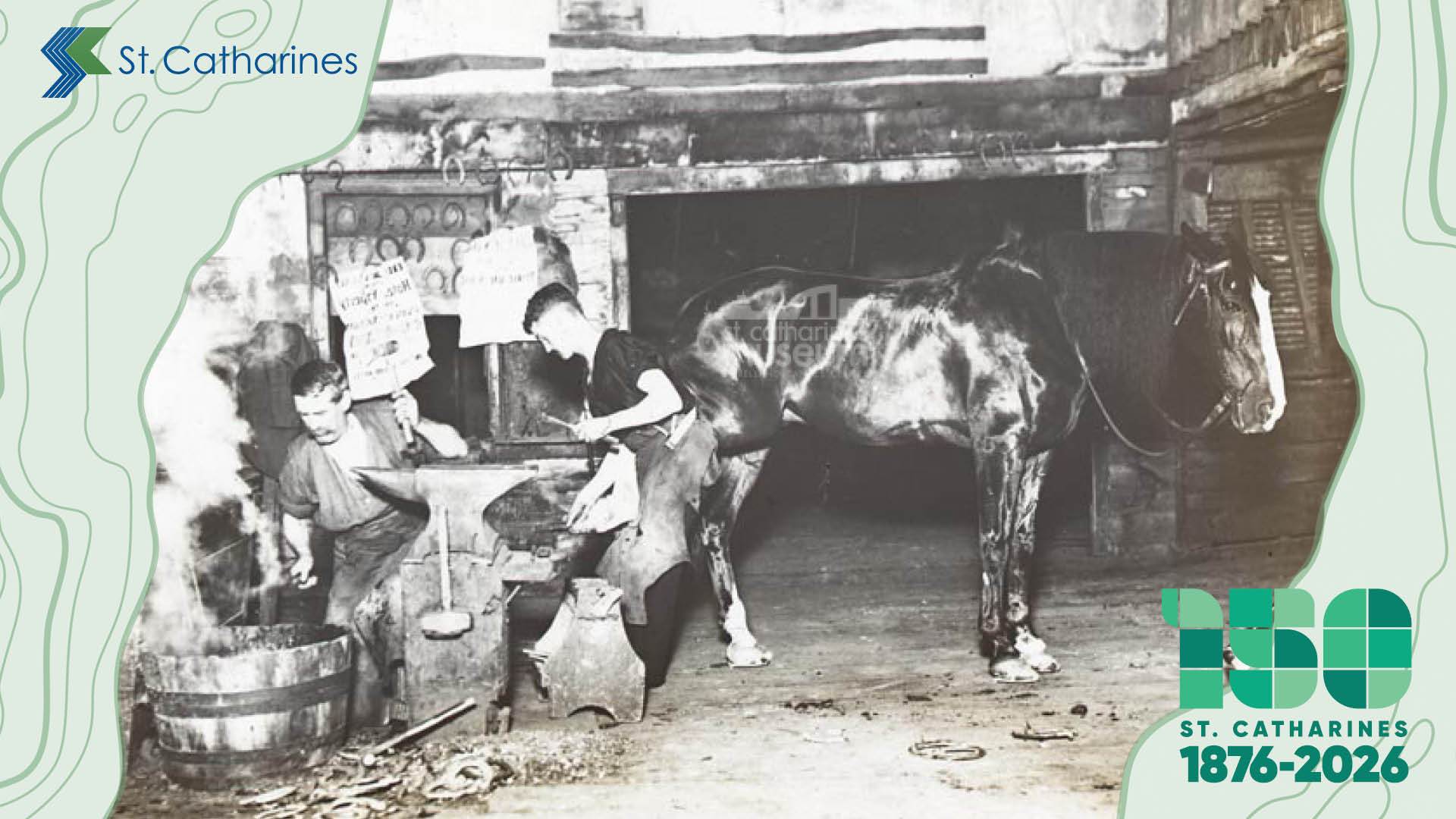
In the early development of 19th century Canadian communities, having access to tools and a way to repair them was of vital importance. You couldn’t just run out to the hardware store to get a new one if something broke. The first task of early settlers was to clear land and build homes and farms. But, to do that, you needed tools such as axes, plows, and wagons. If a piece of equipment broke, finding a way to replace or repair it required the skill of a blacksmith and / or a carpenter.
The 1851 census of the Canadas shows that in Canada West (today’s Ontario) the top two trades in the province were carpenters and blacksmiths. This demonstrates the continued need for local expertise in the repair of metal tools and equipment.
By 1851, St. Catharines was a bustling place which boasted of having six mills including one distillery, one tannery, three foundries and one brewery. Even with three local foundries who were mass producing metal tools, local blacksmiths continued to play an important role in 19th century communities, by making items related to transportation such as sleighs, carts, carriages, and watercraft. In addition, the blacksmith was often the most important local tradesperson dealing with horses and oxen – the main source of transportation - making and replacing horseshoes, repairing wagons, carriages and farming equipment and fixing broken wheels.
This photo from the 1890’s shows the interior of an unknown local blacksmith shop. (2007.13.128)
 Subscribe