




 Back to Search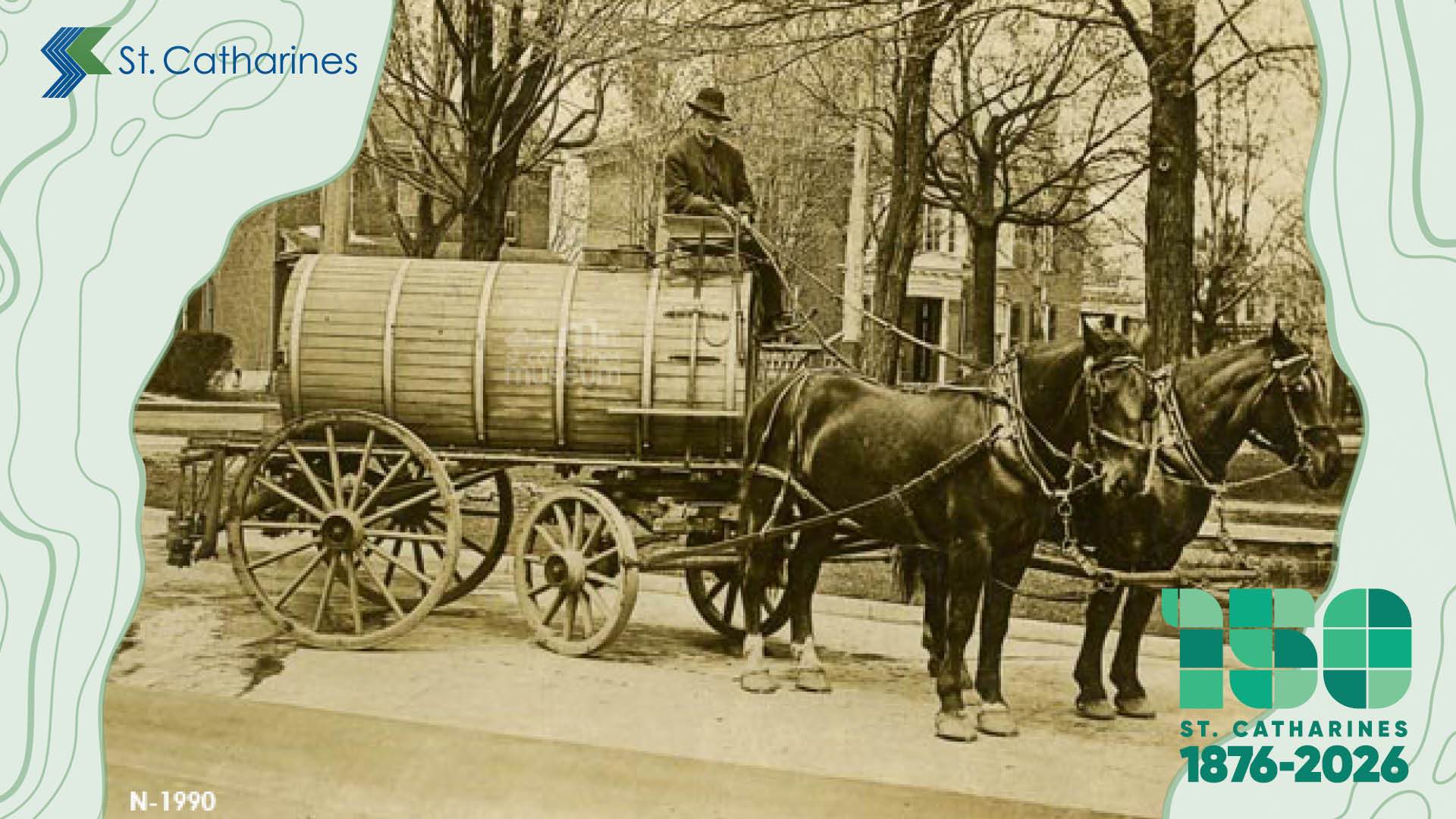
When St. Catharines became an incorporated city in 1876, roads were one of the main priorities of City Council. As the community grew, the traffic and wear and tear on the roads increased along with it.
The St. Catharines Museum and Welland Canals Centre is helping us celebrate our 150th anniversary of being officially incorporated as a City with a weekly look back into our rich history from a diverse range of perspectives.
Early roads were packed with dirt that would become a muddy quagmire depending on the time of year. In addition, traffic in 1876 was horse and buggy which added an additional layer of refuse on the road.
Most early businesses and homeowners were responsible for cleaning up the horse manure and garbage in front of their properties. Many streets in the core of the city had wooden plank sidewalks and raised road crossings at intersections to keep those walking in the downtown from stepping into the mud, or worse.
The first street to be “paved” was in 1900 and was Chestnut Street (now Carlisle Street) and was paved with asphalt over concrete with a concrete curb and gutter.
Early city councils struggled with ways to keep the roads passable all year round, including watering the roads during dry spells to keep the dust and dirt down. This photo shows a horse-drawn watering wagon on Court Street around 1900. This is a similar set-up to what would have been used 25 years earlier when the City was incorporated. (N-1990)
 Subscribe