




 Back to Search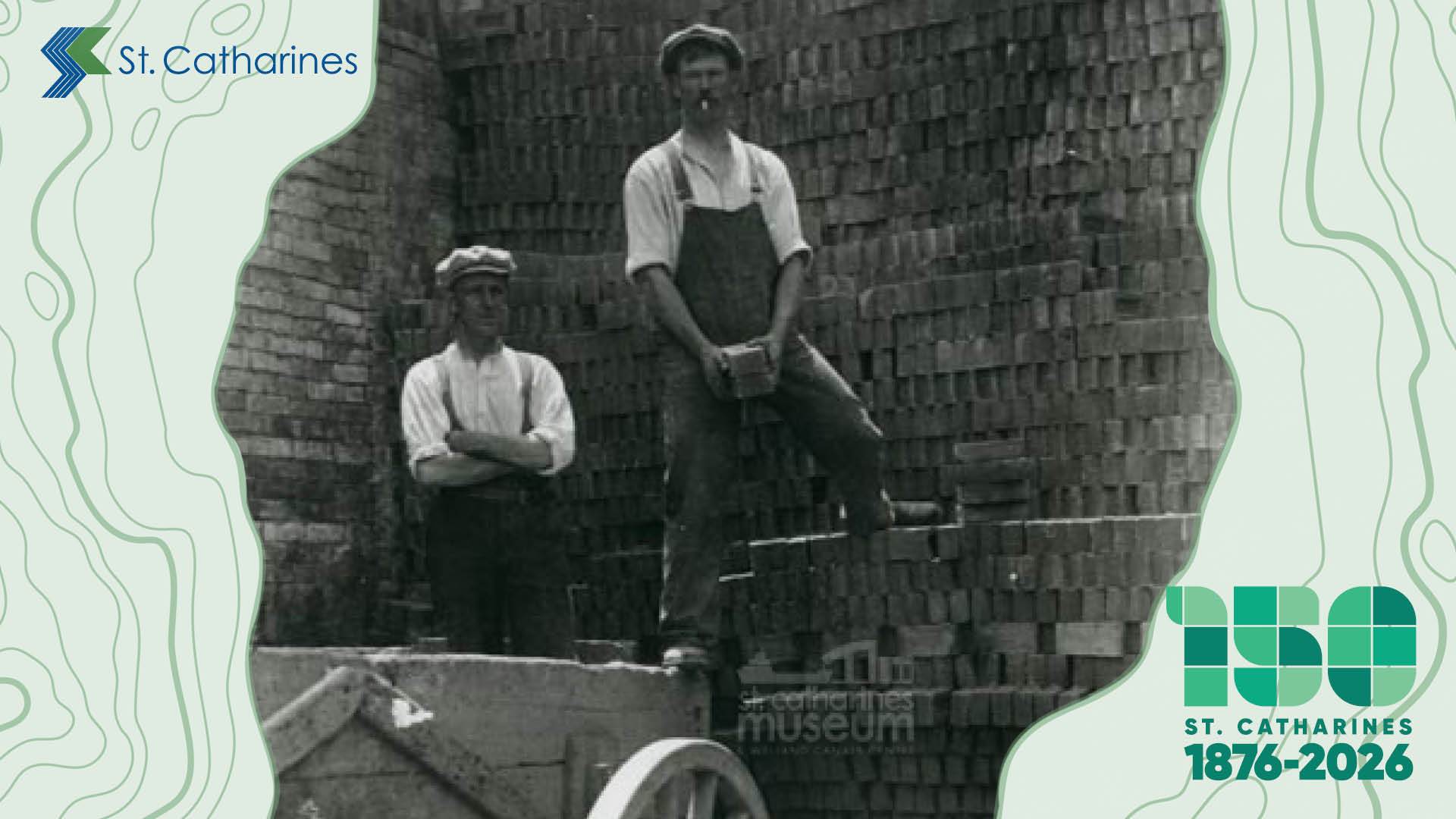
As St. Catharines grew in population and wealth through the second half of the 19th century, larger and more elaborate brick homes became more common. In order to build these buildings, local access to bricks was essential.
The St. Catharines Museum and Welland Canals Centre is helping us celebrate our 150th anniversary of being officially incorporated as a City with a weekly look back into our rich history from a diverse range of perspectives.
Prior to 1832, a brickyard was operated by the William Parnall on the north side of Queenston Road near Hartzel Road. The Parnall home, built of brick was a local attraction as the first brick residence in the area. After William Parnall’s death in 1832, his wife Elizabeth operated the brickyard in partnership with William Harrison.
An advertisement in 1835 promoted bricks for sale for $4 for 1000 bricks. A later advertisement in 1841 noted that “on short notice” bricks could be delivered “on the banks of the canal opposite the Brick Yard”. This references the 2nd Welland Canal nearby.
By 1900, the operation had changed hands a few times and was operating as Paxton and Bray Brickyard which continued to operate with some changes of ownership into the late 20th century.
Brick making was a labour-intensive operation with clay harvested from the site by hand, mixed in pits and formed into bricks for firing in large kilns, then sold directly to buyers.
In this photo, Albert Bush (left) and Walt Woodward are shown in a kiln of the loading bricks onto a wagon for shipment, sometime prior to 1929. (N-4105)
 Subscribe