



 Back to Search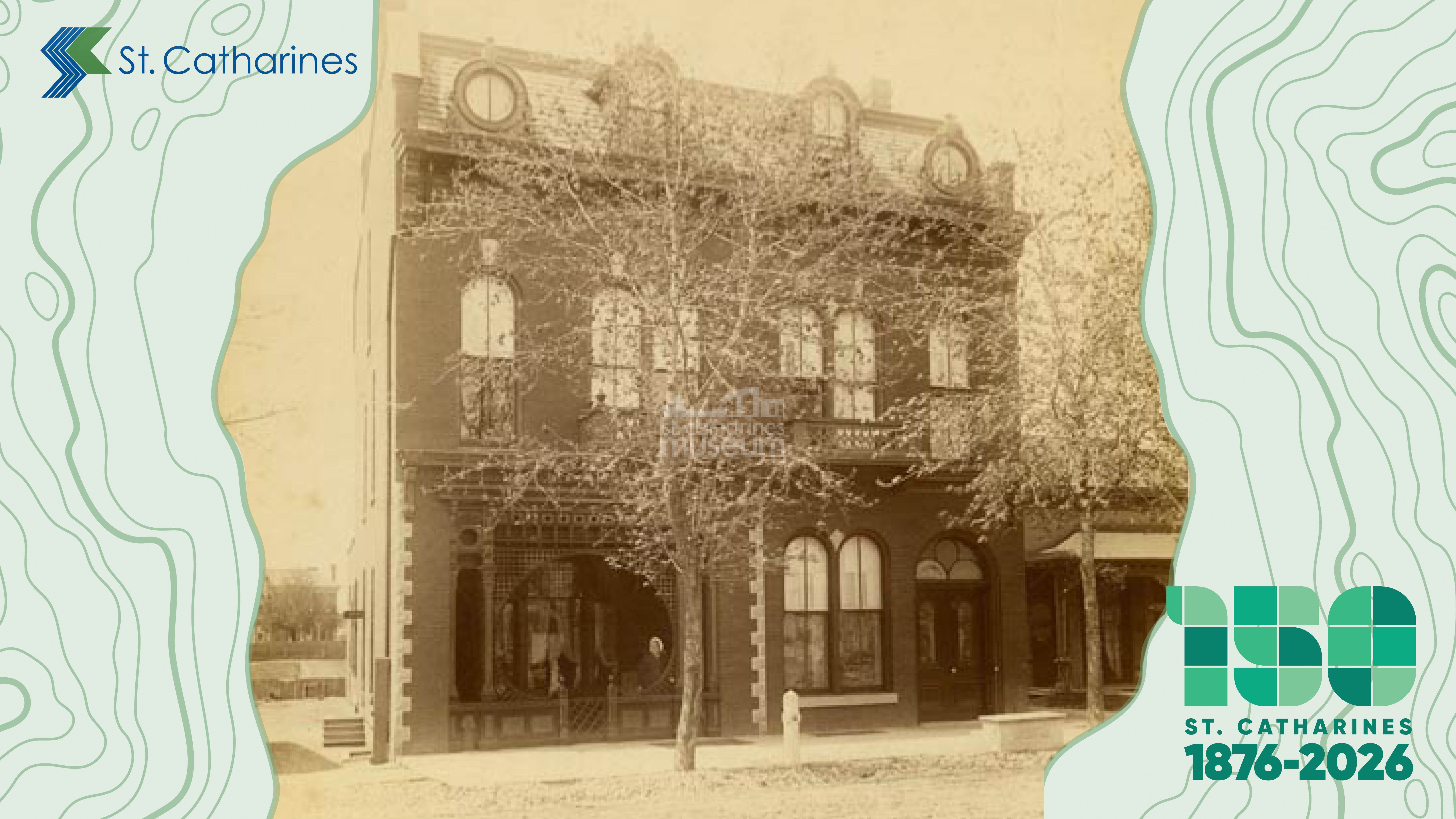
By the middle of the 19th century, the Village of St. Catharines was continuing its pace of growth as business and industry began to take advantage of the access to transport and power provided by the Welland Canal.
The St. Catharines Museum and Welland Canals Centre is helping us celebrate our 150th anniversary of being officially incorporated as a City with a weekly look back into our rich history from a diverse range of perspectives.
The 1851 census report of the Canadas for St. Catharines reports a population of 4,368 residents. The population lived in 635 houses, the majority of which were of timber construction, including 73 shanties and 5 log cabins. The footprint of the village was a much smaller geographic area that spanned Carlton Street to the North, Rykert Street to the South, Louth Street to the West, and Grantham Avenue to the East.
This photo shows the McArdle home which served as both home and commercial bakery to the McArdle family. Originally numbered as 77 King St., this building reflected the new prosperity which St. Catharines was enjoying after the opening of the Welland Canal. The house displayed many of the features of local buildings of the 1860's, with high ceilings and tall round-topped windows.
In 1876, the McSloy brothers bought out the bakery, while the McArdles remained living in the house until 1909. It was purchased by the Knights of Columbus in 1917 and extensive renovations were carried out, providing the organization with an upstairs meeting hall. Later, Lee Printing took over the ground floor and continued business there until the building was demolished to make way for the extension of Carlisle Street. (1969.56.6)
 Subscribe