




 Back to Search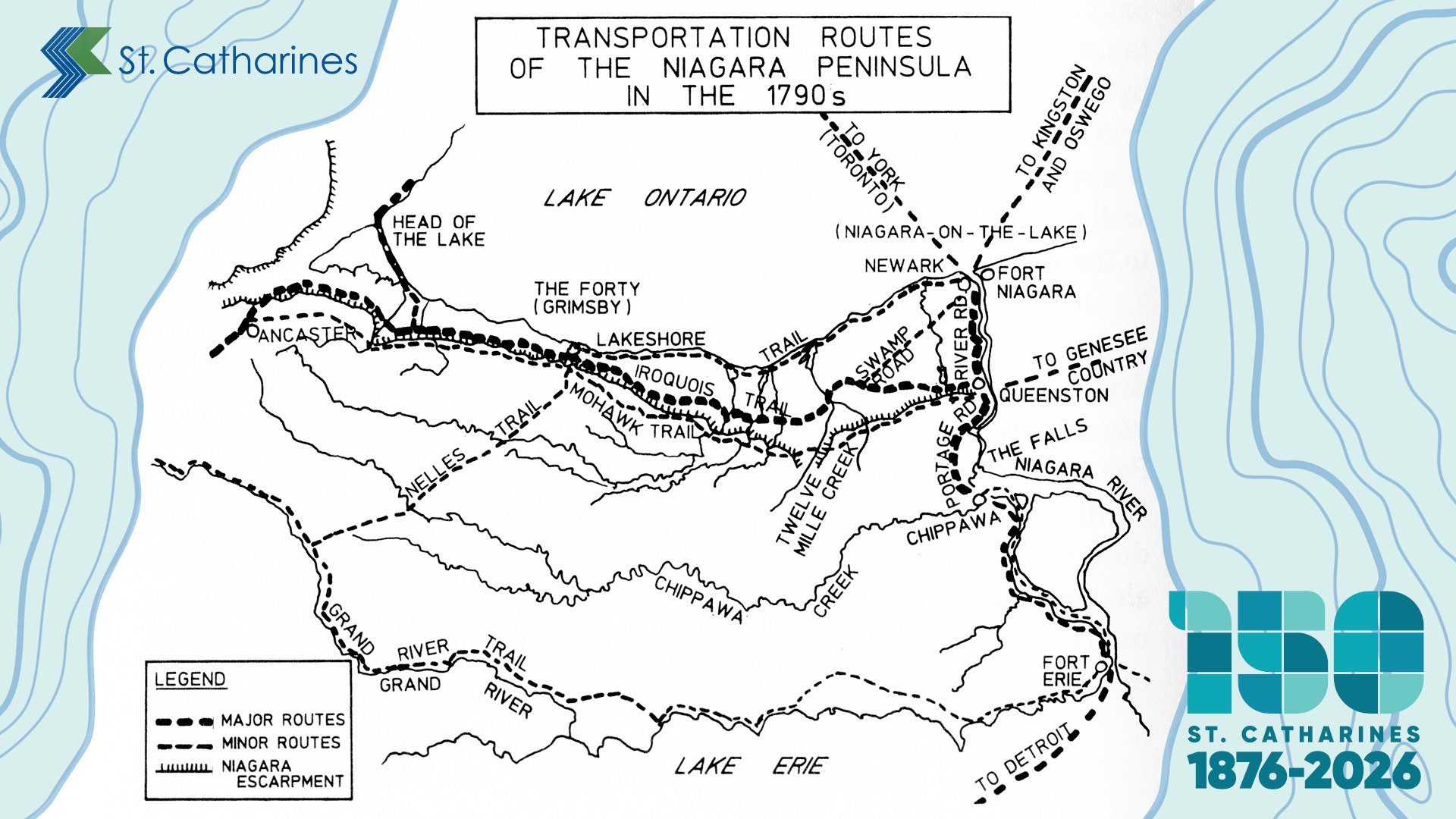
It all starts with the land.
Thanks to ancient geologic conditions, the land that is today St. Catharines has the perfect climate and landscape for comfortable living and excellent growing conditions.
The St. Catharines Museum and Welland Canals Centre is helping us celebrate our 150th anniversary of being officially incorporated as a City with a weekly look back into our rich history from a diverse range of perspectives.
Indigenous peoples have thrived on these lands for millennia, building deep-rooted, culturally rich and prosperous communities. People and animals have been living on this land for approximately 11,000 years, since the ice sheets retreated from Ontario at the end of the last ice age.
Waterways provided the primary travel routes throughout Southern Ontario until the 19th century. Twelve Mile Creek and its tributaries acted as geographic reference points, along with well-used adjacent walking trails that crossed the peninsula helped early people travel the region before an established road network. Some of these early trails would become distinctive major roads in the city – most notably the Lakeshore Road and Queenston – St. Paul Streets.
The map above shows the routes of early trails around 1790. The Lakeshore Trail follows today’s Lakeshore Road and the Iroquois Trail follows the route of Queenston Street to St. Paul Street through the downtown. Source: Butler, Merritt and Powers: The Capital Years, Dundurn Press, 1991.
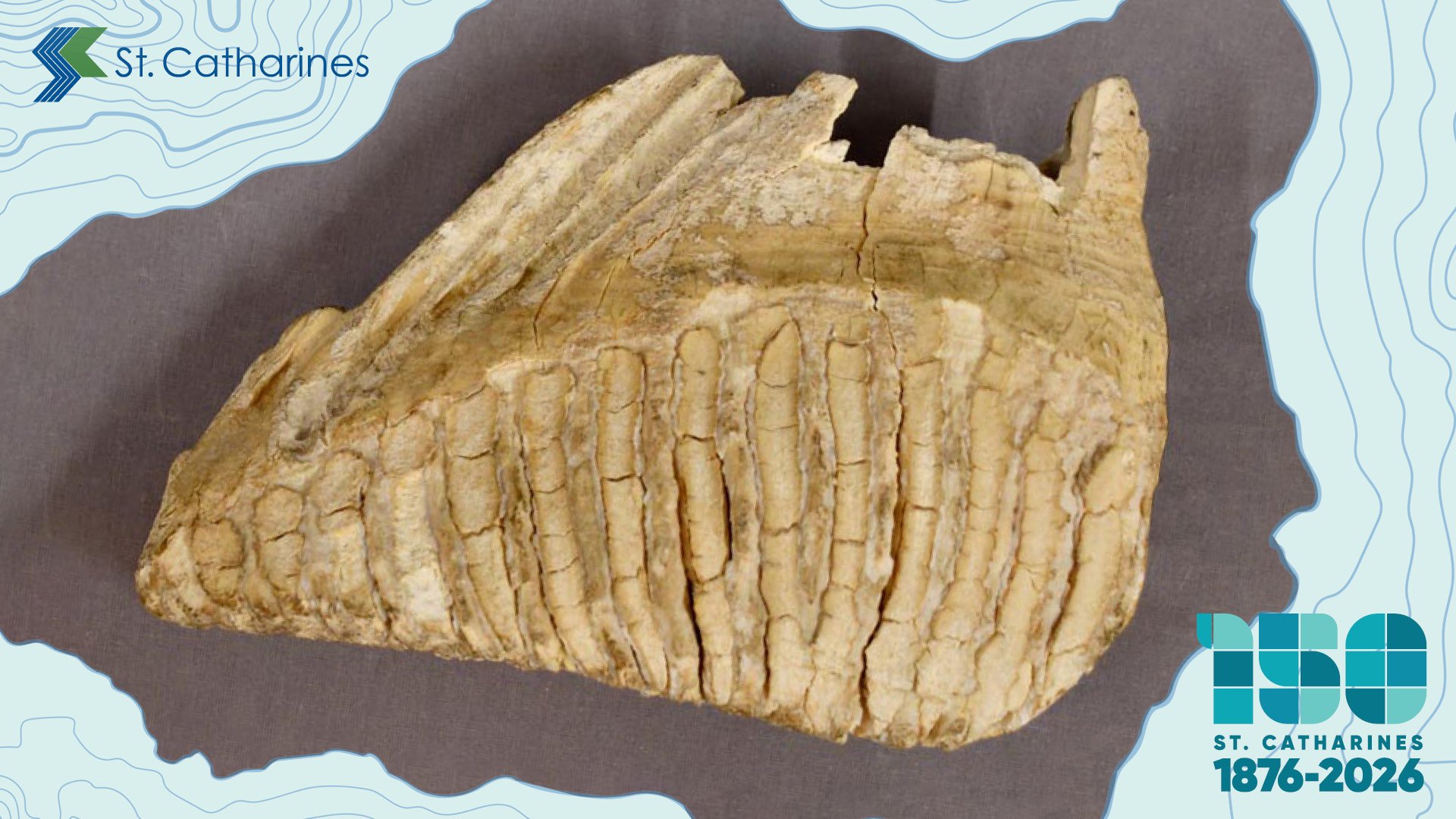
When the first peoples came to the area, ice age mammals were still roaming the lands. This mammoth tooth was dug up in the Homer area and is one of the oldest objects in the St. Catharines Museum collection at approximately 10,000 years old. (1985.237.76).
 Subscribe